.png)

Episode 27
Community-Based NDBI Implementation & Inclusive Early Childhood Models

About This Episode
In this episode of the NDBI Navigator Narratives Podcast, host Dr. Jamie sits down with Dr. Bonnie McBride, a Professor of Developmental and Behavioral Pediatrics at the University of Oklahoma Health Campus and the Director of the Oklahoma Autism Center. The conversation covers Dr. McBride's extensive background, her perspective on Naturalistic Developmental Behavioral Interventions (NDBI), and the unique community-based service delivery models she has implemented in Oklahoma.
Community-Based NDBI Implementation & Inclusive Early Childhood Models


Bonnie McBride


About Our Guest Speaker
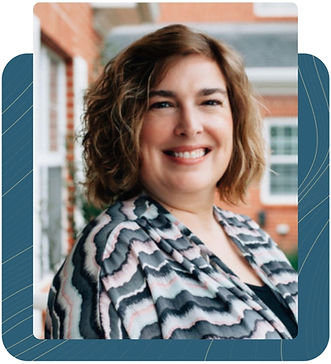
Bonnie McBride
Dr. Bonnie McBride, a Professor of Developmental and Behavioral Pediatrics at the University of Oklahoma Health Campus and the Director of the Oklahoma Autism Center. Her work includes expanding services and conducting research to improve the lives of families and children affected by autism spectrum disorder (ASD). Dr. McBride’s journey began at the University of Washington, where she delved into inclusive preschool teaching and co-founded Project DATA. Collaborating closely with the esteemed Dr. Ilene Schwartz, Director of the Haring Center, she co-authored “The DATA Model for Teaching Preschoolers with Autism,” a testament to their shared dedication.
Show Notes
In this episode of the NDBI Navigator Narratives Podcast, host Dr. Jamie sits down with Dr. Bonnie McBride, a Professor of Developmental and Behavioral Pediatrics at the University of Oklahoma Health Campus and the Director of the Oklahoma Autism Center. The conversation covers Dr. McBride's extensive background, her perspective on Naturalistic Developmental Behavioral Interventions (NDBI), and the unique community-based service delivery models she has implemented in Oklahoma.
💡 Episode Highlights:
Background & Perspective on NDBI
Dr. McBride explains that NDBI is not new to her — it has always been embedded in her training and professional identity. She credits her early mentorship and training with leaders in early childhood special education, including Phil Strain, Sam Odom, and Dr. Eileen Schwartz (Project DATA), as foundational influences. Rather than seeing NDBI as a trend, she views it as a formal name for practices that have long existed in the field: relationship-driven, developmentally informed, and motivation-centered teaching. She also offers a balanced perspective on intervention approaches. While NDBI emphasizes child motivation and naturalistic learning, she highlights the continued value of Discrete Trial Training (DTT). According to Dr. McBride:
DTT can help children learn to respond to specific cues
It provides a structured entry point for adults learning instructional interaction
It can serve as a bridge toward more complex naturalistic strategies
Her message is clear: effective intervention is not about choosing one camp over another — it’s about thoughtful integration.
Community Implementation: The “Early Foundations” Model
A major focus of the episode is Dr. McBride’s Early Foundations program in Oklahoma, which reimagines early autism intervention as a community-embedded model rather than a clinic-centered service.
Key features include:
Inclusive Setting
The program partners with local Mother’s Day Out childcare programs — often housed in churches — to create inclusive peer environments.
Weekly Structure
Children attend inclusive programs 2 days per week to build peer access
3 days per week focus on intensive intervention
These days blend traditional instruction and NDBI strategies
Reducing Access Barriers
The program works closely with Sooner Start (Oklahoma’s Part C system) and does not require a formal autism diagnosis. Enrollment is based on developmental risk screening, allowing families to:
Bypass long diagnostic waitlists
Receive support immediately
Access services earlier in development
This approach prioritizes intervention timing over labels.
Classroom Integration & Real-World Challenges
Dr. McBride also discusses collaboration with childcare centers and school districts to sustain inclusive placements. Several districts have adopted hybrid classroom models that merge:
Special education classrooms
Universal pre-K classrooms
This structure promotes inclusion while preserving specialized support.
However, she notes an important reality: implementing strict NDBI within group classrooms is difficult. Disruptions, competing demands, and limited individual time can make focused instruction challenging.
This insight informs her preference for a hybrid model:
Inclusive peer environments for social learning
Dedicated time for intensive one-on-one intervention
The balance allows children to access both community participation and targeted skill-building.
Key Takeaways
NDBI reflects long-standing developmental practices, not a passing trend
Structured teaching (including DTT) still has a place in thoughtful programming
Community-based models can dramatically reduce access barriers
Inclusion works best when paired with intensive individualized support
Hybrid systems may be the most realistic and effective approach
Episode Resources

Episode Resources
Whether you’re a parent or a professional, you don’t to miss an episode.